
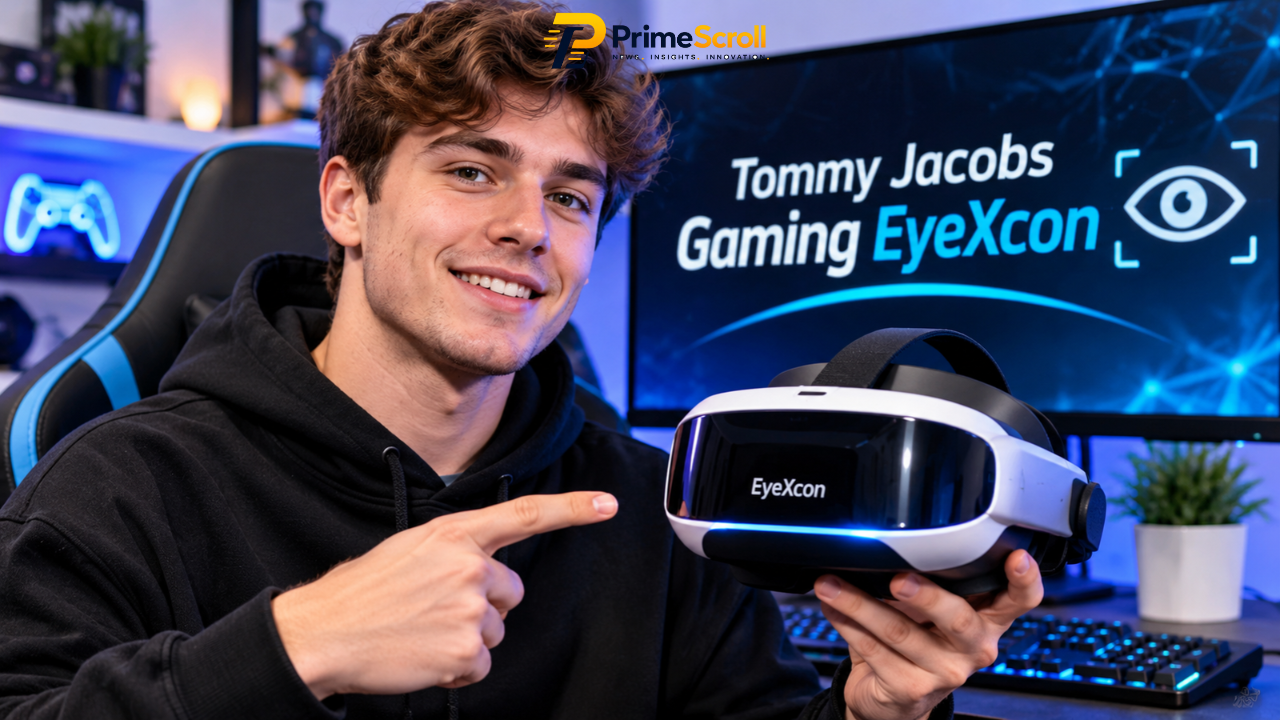
Gaming technology is changing the way people interact with digital entertainment. From motion-sensitive controls to virtual reality headsets, modern gaming systems are introducing experiences that once seemed far beyond the reach of ordinary players. Among the technologies attracting attention is eye-tracking, a system that allows compatible devices to recognize where someone is looking.
This growing interest also raises questions about unfamiliar names appearing in gaming searches. One example is Tommy Jacobs Gaming EyeXcon. People searching for this phrase may expect to find information about a gaming personality, a technology project, a product, or an event.
The difficulty is that these possibilities are not interchangeable. A gaming product should have identifiable technical information, while a public personality should have a verifiable profile. An event should have an organizer and published details.
Rather than treating online descriptions as established facts, this guide examines the search phrase carefully, explains the technology associated with eye-tracking, and explores what readers should verify before accepting claims about EyeXcon.
What Is Tommy Jacobs Gaming EyeXcon?
Tommy Jacobs Gaming EyeXcon is a distinctive search phrase that combines a personal name with gaming-related terminology. However, the exact connection between Tommy Jacobs and EyeXcon is not established by the keyword itself.
There is an important difference between a phrase that appears in search results and a documented gaming project.
For example, a person might be connected to gaming through content creation, product development, competitive play, or event organization. Each role requires different supporting evidence.
The same applies to EyeXcon. Without an official product announcement, event listing, company website, or other dependable reference, it would be misleading to describe it as a confirmed gaming console, convention, or technology platform.
Here is a useful way to understand the search topic:
| Element | What can reasonably be established |
|---|---|
| Tommy Jacobs | A personal name included in the search phrase |
| Gaming | The digital entertainment and interactive technology industry |
| EyeXcon | A distinctive term whose exact identity needs verification |
| Combined keyword | A search query suggesting interest in a possible connection between these elements |
This distinction helps readers understand the topic without confusing speculation with confirmed information.
Why Is Tommy Jacobs Gaming EyeXcon Attracting Attention?
Unusual combinations of names and technology terms often create curiosity. When people encounter an unfamiliar phrase, they generally want a straightforward explanation.
They may have seen it in an article, a social media discussion, a search result, or another online reference.
There are several possible reasons someone might investigate Tommy Jacobs Gaming EyeXcon.
Interest in a Gaming Personality
Some searches begin with a person’s name. Readers may want to discover whether that individual creates gaming content, participates in online communities, develops technology, or has another public connection with the industry.
However, the appearance of a name alongside the word gaming does not establish someone’s professional background.
A reliable profile, interview, official account, or published contribution would provide stronger evidence.
Curiosity About EyeXcon
The unusual spelling of EyeXcon may encourage people to investigate whether it represents a company, gaming event, digital platform, or product.
Names associated with technology often sound like established brands even when their actual identity is unclear.
That is why finding an official source is more important than relying on repeated descriptions across unrelated websites.
Searching for New Gaming Technology
Eye-tracking is an established area of technology. It has applications in virtual reality, accessibility, research, and certain gaming experiences.
Someone encountering the term EyeXcon might naturally associate it with these developments.
Still, the existence of eye-tracking technology does not establish that a specific product called EyeXcon uses it.
Understanding Eye-Tracking Technology in Gaming
One of the most interesting technologies connected with this discussion is eye-tracking.
Eye-tracking systems use cameras, infrared illumination, and specialized software to estimate the direction of a person’s gaze. Depending on the device, the system can identify where someone is looking and use that information as an input.
This is different from traditional gaming controls.
A mouse tracks hand movement, a controller responds to button inputs, and a touchscreen detects physical contact. An eye-tracking system instead interprets visual attention.
The technology is already used in certain specialized devices and applications, although availability depends on the hardware and software involved.
How Does Gaming Eye-Tracking Work?
A typical eye-tracking setup involves several stages.
1. Capturing eye movement
A compatible camera or sensor observes the user’s eyes. Some systems use infrared light to help identify eye features under different lighting conditions.
2. Processing visual information
Software analyzes the captured images and estimates the direction of the user’s gaze.
3. Calibrating the system
Many systems require an initial calibration process. The user looks at specific points so the software can better interpret their eye position.
4. Translating gaze into input
Compatible applications can use this information for selection, navigation, camera behavior, or other supported functions.
5. Updating the experience
The software responds to changes in gaze direction, depending on the features supported by the particular game or device.
The accuracy and responsiveness of these systems vary. Camera quality, lighting, calibration, software design, and individual differences can all affect performance.
How Eye-Tracking Can Change the Gaming Experience
Eye-tracking is not simply about replacing a controller with eye movement. Its usefulness depends on how developers integrate it into a game.
Several applications demonstrate why the technology has attracted interest.
Gaze-Based Interaction and Object Selection
In compatible applications, looking at an object can help identify which element a player wants to interact with.
For example, a virtual reality interface might highlight an object when the player looks toward it. A separate button press or gesture can then confirm the selection.
This can make certain menus easier to navigate.
However, gaze-based selection needs thoughtful design. Looking at something does not always mean someone wants to interact with it.
More Natural Camera Experiences
Some supported games and applications use gaze information to influence camera behavior.
This can make interactions feel more responsive, especially in immersive environments.
The feature must be carefully controlled. If the camera reacts too aggressively to small eye movements, it can become distracting rather than helpful.
Foveated Rendering in Virtual Reality
Foveated rendering is one of the most technically interesting applications of eye-tracking.
Human vision does not have equal detail across the entire visual field. We see the greatest detail in the area directly focused on, while peripheral vision provides less precise information.
Eye-tracked foveated rendering uses this principle.
The system can allocate more graphical processing resources to the area where the user is looking and reduce detail in other areas.
Potential advantages include:
- More efficient use of graphics processing power.
- Better performance in supported VR applications.
- Opportunities for improved visual quality.
- Reduced rendering demands in compatible systems.
However, results depend on the headset, graphics hardware, software implementation, and rendering technique.
Gaming Research and Performance Analysis
Eye-tracking can also help researchers understand how players process visual information.
For example, researchers may examine:
- Which areas of a screen attract attention.
- How quickly players notice visual changes.
- Whether players overlook important information.
- How attention changes during different gameplay situations.
These observations can help developers improve interface design and study player behavior.
They should not be confused with a guaranteed competitive advantage.
Who Can Benefit From Eye-Tracking Technology?
Eye-tracking has applications beyond traditional gaming. Its usefulness depends on a person’s needs, the available equipment, and software compatibility.
Players Who Need Accessibility Options
Accessibility is an important area of eye-tracking development.
Some people cannot comfortably use a conventional keyboard, mouse, or controller. Gaze-based input can provide another way to interact with compatible computers and applications.
Depending on the system, eye control may support:
- Moving a pointer.
- Selecting on-screen elements.
- Navigating menus.
- Using compatible communication tools.
- Operating certain games and applications.
Not every game supports these functions, so checking compatibility is essential.
Virtual Reality Enthusiasts
VR users can benefit from eye-tracking features that make virtual environments more responsive.
Possible applications include gaze-based interactions, improved avatar expressions, and foveated rendering.
These features can make certain experiences feel more natural, although they are not available on every headset.
Game Developers and Researchers
Developers can use eye-tracking to understand how people interact with interfaces and visual environments.
This information may help improve:
- Menu layouts.
- Tutorial instructions.
- Visual attention cues.
- Interface accessibility.
- Immersive interaction design.
Researchers can also use gaze information to study visual attention and decision-making in controlled environments.
Gaming Content Creators
Some content creators use eye-tracking equipment to demonstrate visual attention during gameplay or produce additional information for viewers.
For example, a compatible setup might display a gaze indicator during a recorded session.
This is a specialized production feature rather than something every streamer needs.
Eye-Tracking vs. Traditional Gaming Controls
Eye-tracking and traditional controls serve different purposes. One should not automatically be considered better than the other.
| Feature | Eye-tracking | Traditional controls |
|---|---|---|
| Main input | Direction of gaze | Buttons, sticks, mouse movement, or touch |
| Equipment | Compatible cameras or sensors | Controller, keyboard, mouse, or touchscreen |
| Calibration | Often required | Usually minimal |
| Accessibility | Can provide alternative input methods | Depends on the control design |
| Game support | Limited to compatible software | Supported by a wide range of games |
| Precision | Depends on sensor and calibration quality | Depends on the device and user’s control |
| Main applications | Gaze interaction and attention tracking | Movement, aiming, navigation, and general input |
The most useful approach is often combining different input methods rather than expecting one technology to replace everything.
Eye-Tracking Benefits and Limitations
Eye-tracking offers interesting possibilities, but it also has practical limitations.
Understanding both sides helps readers avoid unrealistic expectations.
Potential Benefits
- Alternative interaction: Gaze-based input can support people who have difficulty using standard controls.
- Immersive experiences: Compatible VR applications can respond to visual attention.
- Rendering efficiency: Eye-tracked foveated rendering can reduce unnecessary graphical processing.
- Research applications: Gaze information can help analyze how users interact with digital environments.
- Interface improvements: Developers can study attention patterns when evaluating menus and visual layouts.
Important Limitations
- Hardware requirements: Eye-tracking needs compatible equipment.
- Software compatibility: A game may not support gaze-based features.
- Calibration: Performance can be affected when calibration is inaccurate.
- Environmental conditions: Lighting and sensor placement can influence tracking quality.
- Privacy: Gaze information can reveal sensitive details about user behavior.
- Cost: Specialized hardware may be more expensive than standard gaming accessories.
These limitations explain why eye-tracking is better understood as an additional technology rather than a universal gaming solution.
Is Tommy Jacobs Gaming EyeXcon a Real Gaming Product or Event?
This is one of the most important questions surrounding the search phrase.
A specific gaming product should have identifiable information, such as a manufacturer, official specifications, supported devices, and a product announcement.
An event should provide a different set of details, including an organizer, location, schedule, registration information, and official announcements.
For Tommy Jacobs Gaming EyeXcon, the keyword alone does not establish either identity.
Before accepting claims about a product or event, look for the following evidence:
| Verification point | Evidence to look for |
|---|---|
| Official identity | A recognized company, organizer, or verified owner |
| Product information | Model number and technical specifications |
| Availability | Official release or registration information |
| Independent coverage | Reporting from established technology or gaming publications |
| Public feedback | Genuine reviews with identifiable sources |
| Contact details | A legitimate way to contact the responsible organization |
If these details are missing, it is better to describe the identity as unverified instead of presenting an unsupported explanation.
How to Evaluate an Eye-Tracking Gaming Product Before Buying
If you are researching an eye-tracking accessory or gaming device, a careful evaluation can help prevent unnecessary spending.
Check Hardware Compatibility
Start by identifying which devices the product supports.
A peripheral designed for a particular PC setup may not work with a console or VR headset.
Check the manufacturer’s compatibility information before making any decisions.
Examine the Software Requirements
Eye-tracking hardware generally depends on software to interpret and use gaze information.
Look for official documentation explaining installation, calibration, supported applications, and system requirements.
Avoid unfamiliar downloads from unverified websites.
Look for Independent Testing
Manufacturer descriptions explain intended features, but independent testing can provide a clearer picture of real-world performance.
Useful reviews should explain the testing process and discuss both strengths and limitations.
Understand the Warranty and Return Policy
Before purchasing specialized gaming equipment, check:
- Warranty coverage.
- Return conditions.
- Technical support.
- Replacement procedures.
- Additional software costs.
Clear policies make it easier to understand what happens if a product does not perform as expected.
Eye-Tracking Privacy: An Important Issue for Gamers
Eye-tracking introduces a privacy consideration that deserves more attention.
Gaze information is not just another ordinary gaming setting. Depending on how it is collected and analyzed, it can reveal patterns about a person’s attention and interactions.
Some systems process information locally, while others may use connected services or cloud-based processing.
Before enabling these features, users should understand what information is collected and how it is handled.
Consider these questions:
- Does the software store gaze information?
- Is the information processed on the device?
- Can data be shared with third parties?
- Does the provider explain its data retention practices?
- Can users delete stored information?
- Are privacy settings available?
A trustworthy technology provider should explain these practices in clear language.
Users should also avoid sharing sensitive account details or granting unnecessary permissions to unfamiliar gaming applications.
What Could the Future of Eye-Tracking in Gaming Look Like?
Eye-tracking has potential, but its future depends on practical improvements in hardware, software, affordability, and privacy.
Several areas may influence how the technology develops.
Better Integration With Virtual Reality
As VR hardware evolves, eye-tracking may become more closely integrated with immersive interfaces and rendering systems.
This could make gaze-based interactions easier to use in supported applications.
More Accessibility Options
Developers may continue exploring ways to make games usable with different input methods.
Better accessibility support can help more people participate in digital entertainment.
Improved Visual Performance
Advances in rendering technology could make eye-tracked graphics more efficient.
However, performance improvements will depend on implementation and the capabilities of individual devices.
Stronger Privacy Controls
As gaze-based systems become more sophisticated, clear privacy policies and user controls will become increasingly important.
Users should be able to understand and manage how their information is handled.
These developments represent broader industry possibilities. They should not be interpreted as confirmed features of a product named EyeXcon.
Frequently Asked Questions About Tommy Jacobs Gaming EyeXcon
1. What is Tommy Jacobs Gaming EyeXcon?
Tommy Jacobs Gaming EyeXcon is a search phrase combining a personal name with gaming-related terminology. Its precise meaning and the relationship between Tommy Jacobs and EyeXcon have not been established through the keyword alone.
2. Is EyeXcon an officially released gaming console?
There is insufficient verified information to confirm an officially released gaming console under the name EyeXcon. Readers should look for an official manufacturer, product specifications, and independent reviews before accepting such claims.
3. Who is Tommy Jacobs in Gaming EyeXcon?
The search phrase includes the name Tommy Jacobs, but it does not establish his identity or professional role. An official biography, verified public profile, or credible interview would be needed to confirm a connection.
4. Does eye-tracking technology really work in gaming?
Yes. Eye-tracking is an established technology used in certain gaming peripherals, VR systems, accessibility applications, and research environments. Its features depend on compatible hardware and software.
5. Can eye-tracking improve gaming performance?
Eye-tracking can support specific functions, such as gaze-based interaction and visual attention analysis. However, it does not automatically improve aiming, reaction time, or competitive results.
6. Is eye-tracking safe to use?
Eye-tracking hardware can be used as an ordinary input technology, but privacy deserves attention. Users should review the software’s data collection, storage, sharing, and deletion policies before enabling its features.
Final Thoughts
Tommy Jacobs Gaming EyeXcon is an unusual search topic that brings together questions about an individual, an unfamiliar name, and the wider gaming industry.
The most responsible way to understand it is to separate what is established from what still needs evidence. The search phrase does not independently confirm a gaming personality, hardware product, convention, or technology company.
Eye-tracking itself, however, is a genuine and developing technology with practical applications in accessibility, virtual reality, visual interaction, and gaming research.
For anyone researching Tommy Jacobs Gaming EyeXcon, reliable sources should come before impressive descriptions or repeated online claims. Understanding the technology is useful, but verifying the identity behind the name is what makes the information trustworthy.
Also Read: Dan and Shay Tragedy: The Truth Behind the Rumors


