
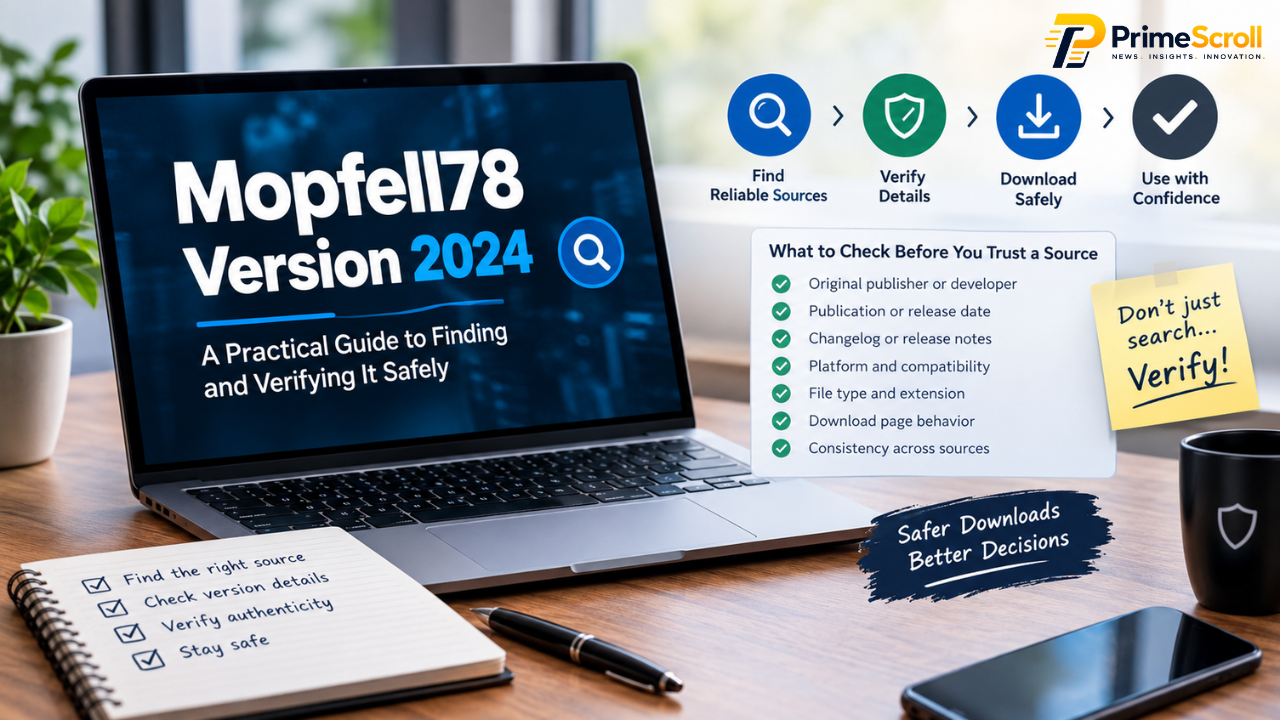
If you’ve searched for mopfell78 version 2024 and come up with scattered, inconsistent, or thin results, you’re not imagining things. This isn’t a mainstream, widely documented product with an official press page and a long Wikipedia entry. It’s the kind of niche, version-specific term that shows up on forums, file-sharing pages, and small directory sites — which means the usual “just Google it and read the top result” approach doesn’t work well here.
That doesn’t mean the search isn’t worth doing properly. It just means it’s worth doing carefully.
This guide walks through what a query like this usually means, why people search it, how to tell a trustworthy source from a sketchy one, and what to check before you download or rely on anything tied to the name. Think of it less as a spec sheet and more as a verification checklist.
What “Mopfell78 Version 2024” Usually Means
When a search term combines an unusual name with a year, it’s almost always pointing to one specific thing: a version or release tied to that year — similar to how software versioning generally works, where release identifiers can be based on sequence numbers, feature sets, or the calendar year itself.
That distinction matters. Searching “mopfell78” gets you general references. Adding “version 2024” tells a search engine — and tells you — that the person wants the edition, build, or update associated with that particular year, not an older one and not a generic overview.
For lesser-known software, tools, mods, or digital resources, this is a completely normal way to search. People do it when:
- An older version stopped working with their current system
- They saw a reference to a “2024 update” somewhere and want to find it
- They’re trying to confirm whether a 2024 release actually exists
- They want to compare it against an earlier version before switching
The tricky part is that a year in a search query doesn’t guarantee a year in the actual product. Some pages slap “2024” in the title just because that’s when they published the page — not because the underlying file was updated then.
Why Reliable Information Can Be Hard to Find
Obscure releases don’t get the same documentation treatment as major software. There’s usually no dedicated changelog page, no press release, and no verified developer account confirming details.
Instead, information tends to be scattered across:
- Small file-hosting or download sites
- Forum threads and community posts
- Archived pages that may or may not still be accurate
- Third-party “roundup” articles that reword each other’s content
None of that automatically makes the information wrong. But it does mean you should treat any single source with a healthy amount of skepticism until you can confirm it against something more reliable — ideally the original publisher or repository.
Quick Reference: What to Check Before You Trust a Source
| What to Verify | Why It Matters |
|---|---|
| Original publisher or developer | Confirms the release isn’t an unofficial repackage |
| Publication or release date | Checks whether “2024” is accurate or just a page title |
| Changelog or release notes | Shows what actually changed, not just claims |
| Platform and compatibility | Prevents installing something that won’t work |
| File type and extension | Flags mismatched or disguised file formats |
| Download page behavior | Aggressive redirects or fake buttons are red flags |
| Consistency across sources | Multiple independent sources agreeing is a good sign |
If a page you’re looking at can’t answer most of these, treat it as a starting point for research — not a final source.
How to Verify a File or Release Is Legitimate
Trace It Back to the Original Source
Before trusting a download, try to find where it actually originated. A page that simply hosts a file with no explanation of who made it or why offers far less confidence than a source that clearly identifies the project.
Cross-Check the Details
Compare the version name, date, and description across two or three sources. If they contradict each other — different release dates, different file sizes, different claimed features — that’s a sign something’s off.
Be Wary of Aggressive Download Pages
Sites that bury the real download link under multiple ads, fake “Download Now” buttons, or urgent pop-up warnings are a common pattern with low-quality or unofficial file hosts. Legitimate sources rarely need to pressure you into clicking.
Scan Before You Open Anything
Even if a file looks legitimate, run it through reputable security software before opening it. This step takes a minute and can save you a much bigger headache later.
Watch the File Extension
If a page claims to offer one type of file but the actual download ends in an unexpected executable extension, stop and reconsider before proceeding.
Comparing a 2024 Version to Older Releases
Newer isn’t automatically better, and older isn’t automatically obsolete. The right choice depends entirely on your setup and what you actually need.
- Choose the newer version when you need current compatibility, recent bug fixes, or features specifically introduced in that release.
- Stick with an older version when your existing environment depends on it, or when the newer release hasn’t been reliably verified yet.
- Avoid switching blindly just because a version number or year looks more recent — check documented changes first.
A Simple Research Checklist
When you’re chasing down an obscure, version-specific term like this one, a consistent process helps more than random searching:
- Search the exact name in quotation marks to narrow results
- Include the year when you need a specific release
- Look for an identifiable developer, repository, or project page
- Compare details across multiple independent sources
- Check for a changelog rather than relying on marketing-style claims
- Confirm platform and compatibility before downloading anything
- Keep a backup of your current setup before replacing it
This approach works just as well for other unfamiliar software names as it does here.
Frequently Asked Questions
What is mopfell78 version 2024? It refers to a release or version associated with the name “Mopfell78” and the year 2024. Because widely available documentation is limited, specific details should be confirmed directly from the original source rather than assumed.
Is mopfell78 version 2024 an official release? Not necessarily just because a page or file uses that label. The year appearing in a title or filename isn’t proof of authenticity — verify the publisher and origin separately.
Where should I look for accurate information? Start with the most original source you can trace — a developer page, repository, or first-published listing — rather than relying on secondhand summaries or download aggregator sites.
Is it safe to download a file labeled this way? Only after you’ve checked the source, compared details across independent references, and scanned the file with security software. Don’t download based on the label alone.
Should I use the 2024 version instead of an older one? That depends on your needs. A newer release may fix issues or add features, but an older version can still be the right call if your system or workflow depends on it. Compare documented changes rather than assuming newer means better.
How do I know if information about it is trustworthy? Consistency is the biggest signal. If the publisher, release date, and details line up across multiple independent sources, that’s a good sign. Contradictions between sources are a reason to dig further before trusting any of them.
Final Thoughts
Searching for something like mopfell78 version 2024 puts you in a different situation than looking up a mainstream app — there’s no single authoritative page waiting with all the answers. That just means the burden of verification falls a little more on you.
The good news is that the process isn’t complicated. Trace the source, compare details across a few places, check compatibility before installing anything, and scan files before you open them. That habit protects you regardless of whether the exact term you searched turns out to be well-documented, obscure, or something in between.
A little patience upfront beats troubleshooting a bad download later.
Also Read: CNLawBlog: Identity, Domains, and What Readers Should Actually Know


