
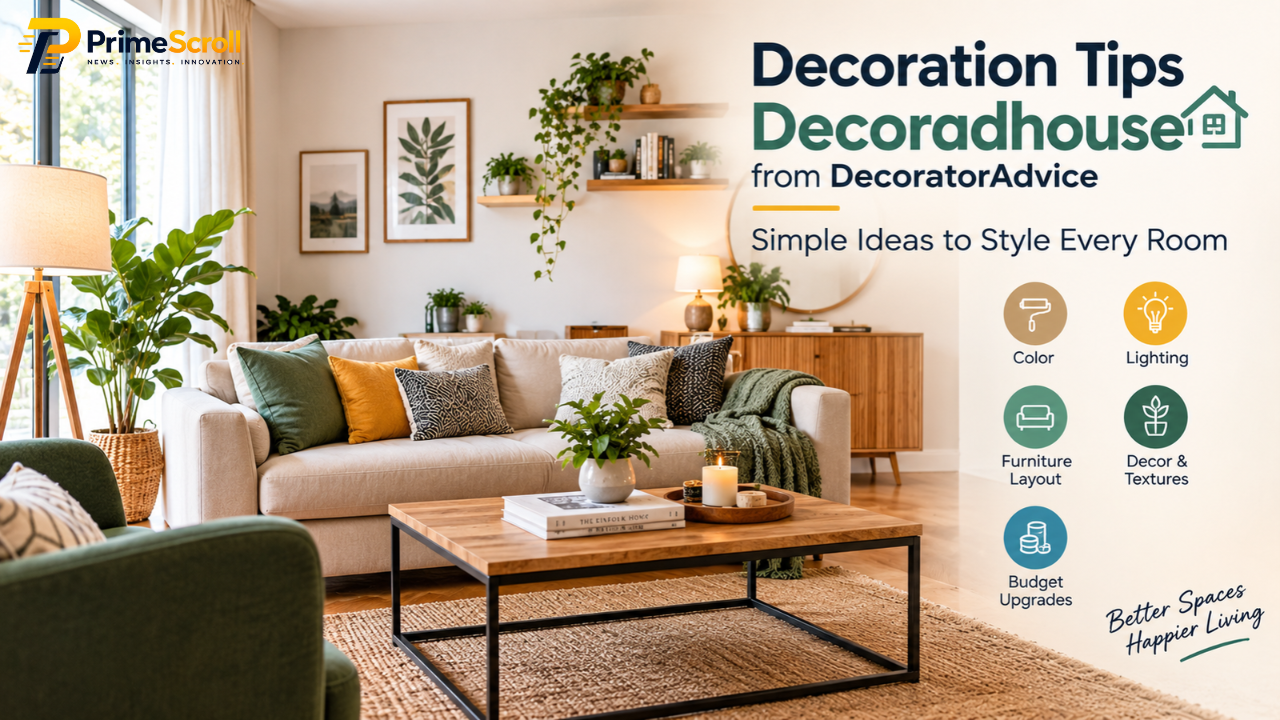
Decoration tips Decoradhouse from DecoratorAdvice focus on one simple idea: you don’t need a full renovation to make a home feel better. A few smart decisions about color, lighting, layout, and small details can change a room completely.
That’s the idea behind the decoration tips Decoradhouse and DecoratorAdvice readers look for: practical, realistic advice that works in real homes, not just in magazine photos.
This guide covers the basics that make the biggest difference. Whether you rent a small apartment or own a large house, you can apply these ideas one room at a time.
Start With a Clear Decorating Plan
Before you buy anything, spend a few minutes thinking about how you actually use each room. A living room used for movie nights needs different things than one used mainly for guests.
A simple plan saves money and prevents the “I bought it, but it doesn’t fit” problem.
Three questions to ask first
- What is the main purpose of this room?
- What do I like and dislike about it right now?
- What is my budget, and what should I spend it on first?
Write the answers down. It sounds basic, but it keeps your choices focused.
Choose a Color Palette You Can Live With
Color sets the mood of a room faster than anything else. A good palette makes a space feel calm, bright, or cozy without extra effort.
A reliable approach is the 60-30-10 rule:
- 60% main color (walls, large furniture)
- 30% secondary color (curtains, rugs, accent chairs)
- 10% accent color (pillows, art, small decor)
This keeps a room balanced and stops it from feeling chaotic.
Colors and the moods they create
| Color Family | Typical Mood | Best Rooms |
|---|---|---|
| Soft white and cream | Clean, open, airy | Living rooms, small spaces |
| Warm beige and taupe | Cozy, welcoming | Bedrooms, dining areas |
| Sage and muted green | Calm, natural | Bedrooms, home offices |
| Navy and deep blue | Elegant, grounded | Studies, accent walls |
| Terracotta and rust | Warm, earthy | Kitchens, entryways |
If you’re unsure, start with neutral walls and add color through things that are easy to change, like cushions and throws.
Use Lighting to Change the Whole Feel
Lighting is one of the most overlooked parts of home decor. A beautiful room can feel flat under a single harsh ceiling light.
Aim for three layers:
- Ambient light: the overall glow, from ceiling fixtures or large lamps
- Task light: focused light for reading, cooking, or working
- Accent light: soft light that highlights art, shelves, or corners
Warm bulbs generally feel more inviting in living areas and bedrooms. Cooler, brighter light works better in kitchens and workspaces.
Natural light matters too. Keep windows clear, choose lighter curtains, and place mirrors opposite windows to bounce daylight deeper into the room.
Arrange Furniture for Comfort and Flow
Good furniture placement often does more than expensive new pieces. A room should be easy to walk through and comfortable to sit in.
Here are a few habits that help:
- Leave about 30 to 36 inches for main walkways.
- Pull sofas slightly away from walls to create depth.
- Group seating so people can talk without shouting.
- Keep large pieces in proportion to the room.
In small rooms, avoid pushing everything against the walls. A slightly floating layout can actually make the space feel more intentional.
Add Texture and Layers
A room with only flat surfaces can feel cold, even if the colors are right. Texture adds warmth and visual interest.
Try mixing a few materials:
- Wool or cotton throws
- Linen curtains
- A woven basket or rattan tray
- Wood furniture with natural grain
- A textured rug
You don’t need many items. Three or four different textures in one room is usually enough.
Decorate With Plants and Natural Elements
Plants make a space feel alive. Even one healthy plant can soften a corner and add color.
If you’re a beginner, choose easy options like pothos, snake plants, or ZZ plants. They tolerate low light and forget-to-water weeks better than most.
No time for plants? Dried branches, wooden bowls, and stone accessories bring a similar natural feel with zero maintenance.
Room-by-Room Decoration Tips
Living room
Keep one focal point, such as a fireplace, a large piece of art, or a statement sofa. Build the rest of the room around it. Avoid filling every surface with decor.
Bedroom
Prioritize comfort. Good bedding, soft lighting, and uncluttered nightstands matter more than trendy accessories. Stick to a calm palette to help the room feel restful.
Kitchen and dining area
Clear countertops make a kitchen feel larger. Display only what you use often, like a nice cutting board or a small herb pot. Swapping cabinet handles is a cheap upgrade with a noticeable effect.
Entryway
This is the first thing guests see. A mirror, a small console table, and a place for keys and shoes can make it both pretty and functional.
Budget-Friendly Decoration Ideas
Great decor doesn’t have to be expensive. Compare where your money goes furthest:
| Upgrade | Approximate Effort | Visual Impact |
|---|---|---|
| Fresh paint on one wall | Medium | High |
| New cushion covers and throws | Low | Medium |
| Updated lighting or lamp shades | Low | High |
| Framed prints or gallery wall | Medium | High |
| Rearranging existing furniture | Low | Medium to high |
| Replacing hardware and handles | Low | Medium |
Thrift stores, local marketplaces, and secondhand furniture are also good sources. A sanded and repainted wooden table can look custom for a fraction of the price.
Common Decorating Mistakes to Avoid
Even confident decorators slip up sometimes. Watch out for these:
- Buying everything in one matching set
- Hanging art too high (center it around eye level)
- Choosing rugs that are too small for the room
- Ignoring scale, such as tiny decor on a large wall
- Following every trend instead of choosing what you like
Your home should reflect the people who live in it, not a showroom.
FAQs: Decoration Tips Decoradhouse from DecoratorAdvice
What is the easiest way to decorate a room on a budget?
Start by rearranging furniture and decluttering. Then add inexpensive layers like cushions, a throw, and better lighting. These changes cost little but noticeably improve the look.
How do I choose the right colors for my home?
Consider the room’s natural light and the mood you want. Start with a neutral base, then add one or two accent colors. Testing paint samples on the wall for a few days helps you avoid costly mistakes.
How many decorative items are too many?
If surfaces feel crowded or hard to clean, you’ve probably gone too far. A good guideline is to group items in odd numbers, such as three, and leave some empty space so each piece stands out.
Can small rooms look bigger with decoration?
Yes. Use light colors, large mirrors, and furniture with exposed legs. Keep the floor as clear as possible, and use vertical space with tall shelves or wall-mounted lighting.
How often should I update my home decor?
There’s no fixed schedule. Many people refresh small items like textiles and accessories each season, and make bigger changes only when something no longer works for their lifestyle.
Do I need an interior designer to decorate well?
Not necessarily. Many people achieve great results using solid decoration tips, careful planning, and patience. A designer can help with large projects, but small and mid-size updates are very doable on your own.
Final Thoughts
Good decorating comes down to a few reliable habits: plan before you buy, choose a balanced palette, layer your lighting, and arrange furniture for how you really live.
If you apply the decoration tips Decoradhouse and DecoratorAdvice readers look for, one small change at a time, your home will gradually feel more comfortable and more like you. Start with one room, and let it guide the next.
Also Read: Scott Morfee: The Off-Broadway Producer Behind Barrow Street Theatre