
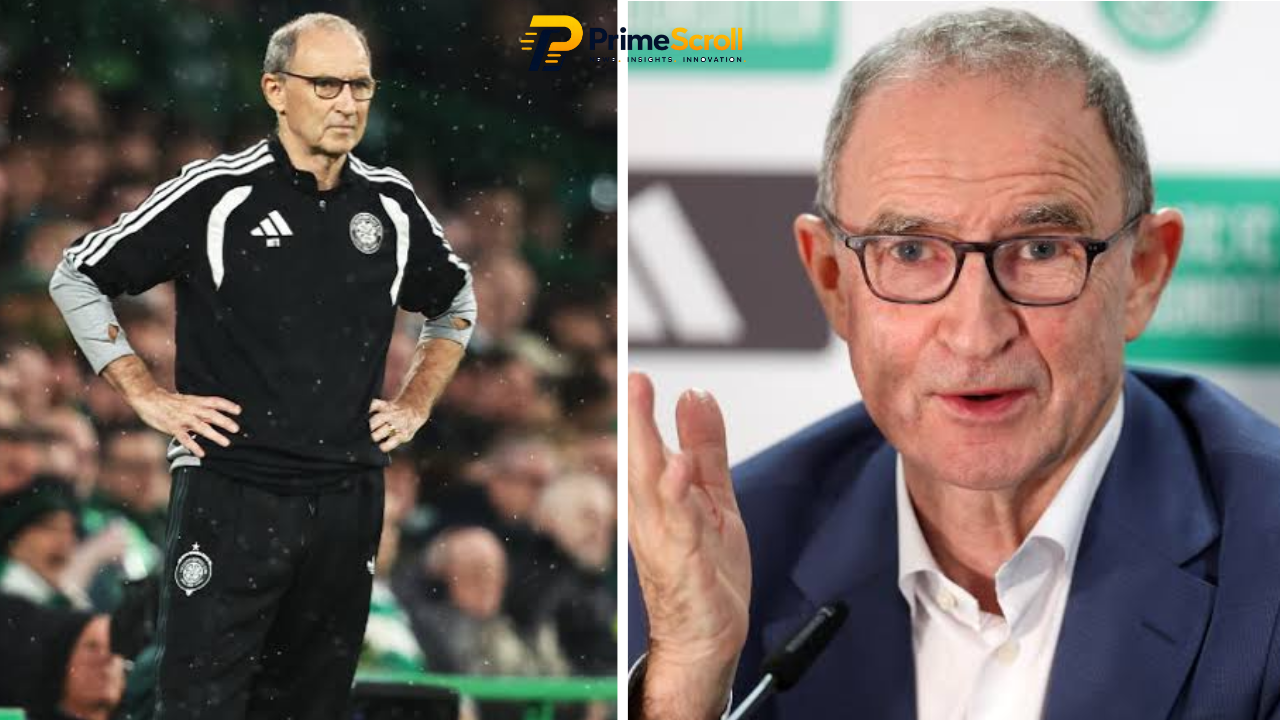
Most football careers burn bright and fade. Martin O’Neill’s has done something rarer: it keeps restarting.
He was a champion of Europe before he turned thirty. He built unfashionable clubs into cup winners. He walked away from Celtic at the top because his wife needed him. Then, at an age when most managers have retired, he came back and won two trophies in one season.
This is the story of how one man pulled that off, told through the ideas that explain it.
Martin O’Neill Career & Life Lessons
O’Neill was born on 1 March 1952 in Kilrea, County Londonderry. He was not an obvious football prodigy handed a pathway. He studied law at Queen’s University Belfast, which is the kind of choice a careful family makes.
Then Nottingham Forest signed him from Distillery in 1971, and he left university without finishing his degree. Leaving a safe plan for an uncertain one is a decision many people regret. For him, it defined everything that followed.
You can see the same instinct later in his career. He has a habit of taking jobs that others consider risky or past their moment.
Lesson Two: Join the Right Dressing Room
Timing helped, too. Forest arrived at a special moment under Brian Clough and Peter Taylor.
- 1977: promotion to the top division
- 1978: the league title, straight after promotion
- 1979 and 1980: back-to-back European Cups
Few clubs of Forest’s size have ever done this. O’Neill was a regular part of that squad, and the experience taught him a lot about how to handle players. Clough’s mix of bluntness, humour and trust became a template that O’Neill still follows in his own way.
He also played 64 times for Northern Ireland. As captain at the 1982 World Cup, he helped lead a team that beat Spain on their own soil and reached the second group stage.
Lesson Three: Build From the Bottom
Many great players struggle as managers. O’Neill succeeded because he started at the bottom of the pyramid and learned the job properly.
At Wycombe Wanderers, he took the club into the Football League in 1993. A year later, a play-off win sent them up again. The club also won the FA Trophy under him. There was no big budget and no star name, only organisation and belief.
That was the moment people began to say he had a gift for lifting teams above their level.
Lesson Four: Make Smaller Clubs Dangerous
Leicester City, where he arrived in 1995, is the clearest example. They were promoted in 1996 and then won the League Cup in 1997 and 2000. Leicester were not among the Premier League’s wealthiest sides, yet they regularly finished in the top half and beat much bigger clubs.
His later time at Aston Villa followed the same pattern. Villa finished sixth in the Premier League three seasons running and reached the 2010 League Cup final.
Lesson Five: Know When Family Comes First
The biggest decision of his career had nothing to do with tactics. In 2005, he left Celtic to care for his wife, Geraldine, who had lymphoma.
By then he had won three league titles, three Scottish Cups and a League Cup at Celtic. He had also taken the club to the 2003 UEFA Cup final in Seville, which they lost 3-2 to Porto after extra time. The club was thriving, and he left anyway.
Supporters remember that. It is one reason his return in 2025 felt emotional rather than merely practical.
A Quick Look at the Career
| Stage | Role | Key moment |
|---|---|---|
| 1971–1981 | Forest player | Two European Cups |
| 1982 | Northern Ireland captain | World Cup second group stage |
| 1990s | Wycombe manager | Promotion into the Football League |
| 1995–2000 | Leicester manager | Two League Cups |
| 2000–2005 | Celtic manager | Treble in 2001, Seville in 2003 |
| 2006–2010 | Villa manager | Three straight sixth-place finishes |
| 2013–2018 | Ireland manager | Euro 2016, win over Germany |
| 2025–present | Celtic manager | Double in 2025–26 |
The International Chapter
His five years with the Republic of Ireland, alongside assistant Roy Keane, are easy to underrate. The team beat Germany 1-0 in a qualifying match and reached Euro 2016. At the tournament, Ireland beat Italy and made the last 16.
Things then slid. Ireland missed the 2018 World Cup and struggled in the Nations League. O’Neill left by mutual consent in November 2018 after a run of poor results.
It was not a happy ending, but it showed he could do something many club managers cannot: create a competitive team with limited time together.
Lesson Six: Never Assume It’s Over
This is where the story becomes unusual. In 2025, Celtic needed help. O’Neill had two interim spells in the same season, and the second changed everything.
After Wilfried Nancy was sacked following just eight games, Celtic appointed O’Neill until the end of the season. The outcome was striking. Celtic won the Scottish Premiership with a late run that overtook Hearts, then beat Dunfermline in the Scottish Cup final.
That double earned him the permanent job. He signed a one-year contract in June, with the option of another year.
What Is Happening Now
The new season has brought mixed feelings. In the league, the early form looked strong. Celtic won eight of their first nine league games.
Europe has been tougher. Celtic lost a Champions League play-off to LASK Linz, which sent them to the Europa League. There, they lost 2-1 to Celta Vigo on 22 October, their third defeat in a row in that competition. Even so, O’Neill said he still believed progress was possible.
His health was also in the news. Celtic said in August that he had undergone a small procedure in hospital and asked for privacy. The club gave no further detail, and it would be wrong to guess.
How His Teams Play
An O’Neill side is rarely complicated. You will usually notice these things:
- A compact, well-drilled shape
- Quick, direct attacks, often down the flanks
- Strong belief and a resilient mentality
- Trust in experienced players
Critics argue this style can feel dated at the highest European level. Fans counter that it has delivered trophies for four decades, which is hard to argue with.
Why His Story Keeps Resonating
Part of the appeal is simple. People like a comeback. Part of it is deeper. O’Neill represents a version of football that values judgment and character over fashion.
He has failed at times, particularly at Sunderland and in the final stretch with Ireland. Yet his best moments are so vivid that supporters tend to remember those first.
Martin O’Neill: Frequently Asked Questions
Who is Martin O’Neill?
He is a Northern Irish football manager and former midfielder, best known for winning two European Cups with Nottingham Forest and for his two spells in charge of Celtic.
How old is Martin O’Neill?
He was born on 1 March 1952, making him 74 as of October 2026.
Did Martin O’Neill study at university?
Yes. He studied law at Queen’s University Belfast but left in 1971 to join Nottingham Forest.
What did he win at Celtic?
In his first spell from 2000 to 2005, he won three league titles, three Scottish Cups and a League Cup, including the 2001 domestic treble. In 2025–26, he won the league and Scottish Cup double.
Why did he leave Celtic in 2005?
He stepped down to support his wife Geraldine during her treatment for lymphoma.
Is he still Celtic’s manager?
As of the most recent reports, yes. He is the permanent manager on a one-year deal with an option for a second year. Check Celtic’s official channels for the latest.
Final Thoughts
Martin O’Neill’s career is a reminder that football rewards persistence as much as talent. He has been a champion, a builder, a family man and, at 74, a manager still facing fresh challenges.
How the current Celtic season ends is uncertain. What is already clear is that few people in the game have lived as many chapters, or kept the public’s affection through so many of them.
Also Read: Decoration Tips Decoradhouse from DecoratorAdvice: Simple Ideas to Style Every Room


One thought on “Martin O’Neill: The Law Student Who Became Football’s Greatest Survivor”