
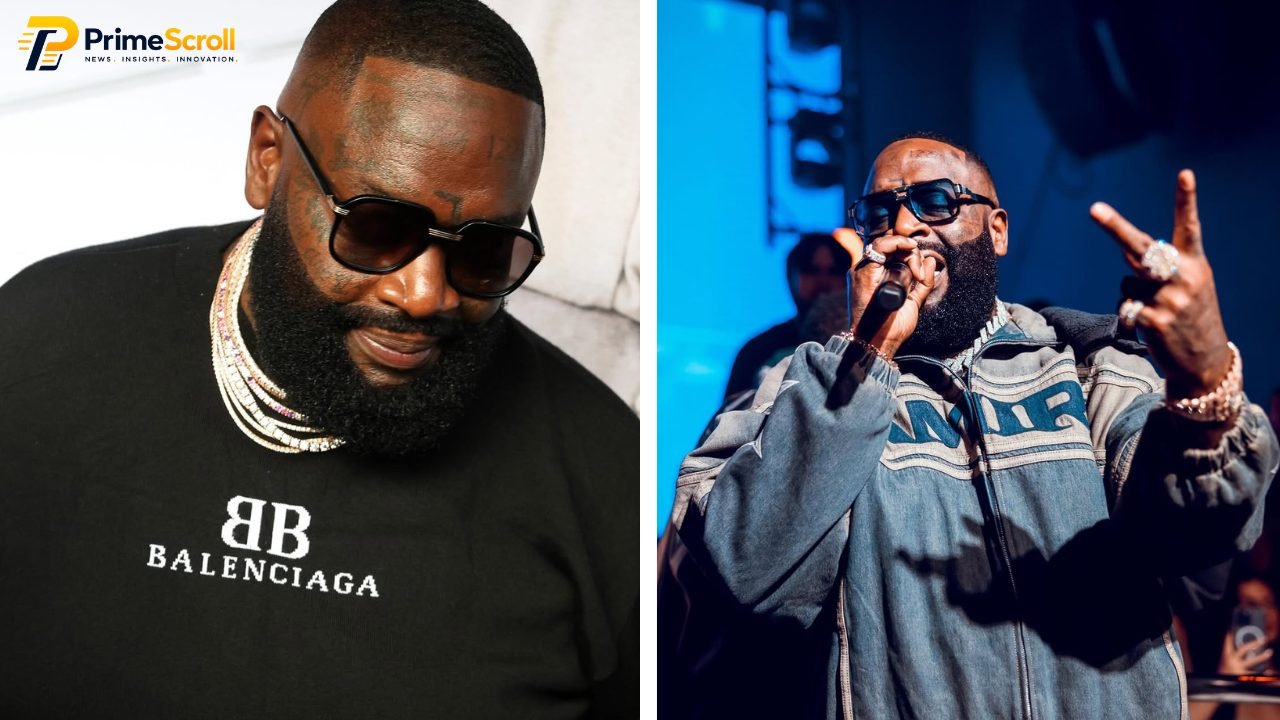
Rick Ross isn’t just one of hip-hop’s most recognizable voices — he’s also one of its savviest businessmen. While plenty of rappers talk about wealth, Ross has spent two decades quietly building a portfolio that stretches well beyond the recording booth.
So how did a Miami-born artist turn platinum records into a sprawling business empire? Let’s break it down.
Who Is Rick Ross?
Born William Leonard Roberts II on January 28, 1976, in Clarksdale, Mississippi, Rick Ross was raised in the Carol City neighborhood of Miami Gardens, Florida. Before music, he worked as a correctional officer, a chapter of his life that later became a point of public debate but never slowed his rise.
His 2006 single “Hustlin'” changed everything. The track caught the attention of major industry players, led to a deal with Def Jam Recordings, and launched a career that would eventually make him one of the genre’s most bankable names — both on stage and in the boardroom.
How Much Is Rick Ross Worth?
Estimates of Rick Ross’s net worth vary depending on the source, since much of his wealth comes from privately held businesses and real estate that aren’t publicly disclosed. Most financial outlets place his current net worth somewhere between $150 million and $200 million, with $150 million being the most commonly cited figure.
That range reflects a few realities:
- His income comes from multiple, diversified streams rather than one primary source.
- A significant portion of his wealth is tied up in real estate and business equity, not liquid cash.
- Private deals and franchise ownership make exact valuation difficult.
The Business Empire Behind the Music
What sets Rick Ross apart from many of his peers is that he didn’t stop at music. Over the years, he’s built out a genuine portfolio of income-generating assets.
Maybach Music Group (MMG)
Ross founded MMG in 2009, turning it into a launching pad for artists like Meek Mill and Wale. Beyond the music, the label itself functions as a business asset — one that generates revenue through artist deals, publishing, and brand licensing.
Restaurant Franchises
Ross became a Wingstop franchisee, eventually owning dozens of locations. Franchise ownership is a classic wealth-building move for celebrities, offering steady, recurring income that doesn’t depend on album sales or touring schedules.
Spirits and Beverage Brands
He’s held equity stakes in beverage lines, including champagne and specialty spirits brands. These partnerships typically combine celebrity marketing power with a share of long-term brand profits.
Real Estate
Ross owns several properties, including a large estate in Fayetteville, Georgia, often referred to online as the “Maybach Music Group Mansion.” Real estate has served as both a personal lifestyle statement and a long-term appreciating asset in his portfolio.
Rick Ross’s Income Streams at a Glance
| Income Source | Description | Wealth Contribution |
|---|---|---|
| Music & Touring | Album sales, streaming royalties, live shows | High |
| Maybach Music Group | Record label, artist deals, publishing | Medium-High |
| Restaurant Franchises | Wingstop locations and other ventures | Medium |
| Spirits & Beverage Deals | Equity stakes and brand partnerships | Medium |
| Real Estate | Multiple properties across the U.S. | Medium-High |
| Media & Appearances | TV, acting roles, brand endorsements | Low-Medium |
Why Rick Ross’s Approach Stands Out
A lot of artists chase big single paydays. Ross has generally taken a different route, favoring ownership and recurring income over one-off deals. A few things define his approach:
- Ownership over royalties — controlling his label and masters rather than relying solely on outside deals.
- Diversification — spreading income across music, food, beverages, and property instead of one industry.
- Brand consistency — leaning into his “Boss” persona to make every venture feel connected to his larger image.
This strategy is part of why his net worth has continued climbing even during years without a major album release.
Rick Ross’s Career Timeline
Ross’s business empire didn’t appear overnight. It grew alongside a music career that has spanned two decades.
- 2006 — Releases his debut album Port of Miami, which debuts at number one on the Billboard 200 behind the breakout single “Hustlin’.”
- 2008 — Follows up with Trilla, also a chart-topper, cementing his place as one of the South’s leading hitmakers.
- 2009 — Founds Maybach Music Group, signing artists like Meek Mill, Wale, and French Montana, and releases Deeper Than Rap.
- 2010 — Drops Teflon Don, featuring hits like “B.M.F.” and “Aston Martin Music,” widely seen as a career high point.
- 2012–2014 — Releases God Forgives, I Don’t and Mastermind, both debuting at number one, while expanding into restaurant franchising.
- 2017–2019 — Puts out Rather You Than Me and Port of Miami 2, a sequel to his debut, showing his continued relevance more than a decade in.
- 2021 — Releases Richer Than I Ever Been, his eleventh studio album, alongside growing business ventures in spirits and real estate.
- 2023–2025 — Continues releasing music, including Too Good to Be True with Meek Mill, while expanding brand partnerships and launching new products.
- 2026 — Prepares to release Set in Stone, continuing a release schedule that’s stayed active for nearly two decades.
This consistency matters. Ross hasn’t leaned on one big moment — he’s stayed visible and active in music while his business ventures compounded quietly in the background.
Rick Ross’s Lifestyle and Luxury Assets
Part of what makes Ross’s brand work is that he lives the “Boss” persona he built his career on. His public lifestyle includes:
- A large estate in Fayetteville, Georgia, often nicknamed the “Maybach Music Group Mansion.”
- Additional properties in states including Florida and Georgia.
- A well-known car collection, which he’s showcased through his annual car and bike show event.
- High-profile jewelry and watches, frequently referenced in his music and public appearances.
It’s worth noting that celebrity lifestyle spending is often as much about brand-building as personal indulgence. For an artist whose music leans heavily on themes of luxury and success, visibly living that lifestyle reinforces the persona that sells his records, endorsements, and events in the first place.
How Rick Ross Compares to Other Hip-Hop Moguls
Ross is far from the only rapper who’s turned music success into a business empire. Here’s how his approach compares to a few other well-known entertainer-entrepreneurs:
| Artist | Primary Business Focus | Approach |
|---|---|---|
| Rick Ross | Restaurants, spirits, real estate, record label | Diversified, ownership-focused |
| Jay-Z | Media, spirits, sports agency, tech investments | Large-scale acquisitions and equity stakes |
| Diddy | Media, fashion, spirits, entertainment | Brand-building across multiple industries |
| 50 Cent | Beverage brands, TV production, endorsements | Early equity deals, media production |
While the scale of these empires differs, the underlying pattern is similar: longevity in hip-hop increasingly depends on ownership and diversification, not just music sales.
Lessons From Rick Ross’s Business Strategy
Whether or not you’re a fan of his music, there are a few practical takeaways from how Ross has built his wealth:
- Reinvest early wins. Ross used his early music success as capital to fund business ventures rather than spending it all on lifestyle.
- Pick recurring-revenue businesses. Franchises and equity stakes generate income even during slow years for his music career.
- Stay visible. Consistent public presence — through music, events, and media — keeps his brand relevant, which in turn supports every other business he’s involved in.
- Don’t rely on one income stream. By spreading investments across music, food, beverages, and property, he’s less exposed if any single industry slows down.
These principles aren’t unique to hip-hop — they apply to almost anyone trying to build wealth that outlasts a single career peak.
FAQs About Rick Ross’s Net Worth and Business Empire
1. What is Rick Ross’s net worth in 2026? Most estimates place his net worth between $150 million and $200 million, though exact figures are hard to confirm due to private business holdings.
2. How did Rick Ross make his money? His wealth comes from a mix of music royalties and touring, his record label Maybach Music Group, Wingstop restaurant franchises, spirits brand partnerships, and real estate investments.
3. Does Rick Ross still own Wingstop franchises? Yes, franchise ownership has been a consistent part of his business portfolio for years and remains one of his more stable, recurring income sources.
4. What is Maybach Music Group? MMG is the record label Rick Ross founded in 2009. It has served as both a creative platform for other artists and a business asset generating revenue through deals and publishing.
5. Is Rick Ross among the richest rappers in the world? While his fortune is substantial, most rankings don’t place him in the very top tier of hip-hop’s wealthiest figures. He remains, however, one of the more successful artist-turned-entrepreneurs in the genre.
6. What makes Rick Ross’s business strategy different from other rappers? His focus on ownership, diversification across industries, and building recurring revenue streams — rather than depending solely on music income — sets his approach apart.
Final Thoughts
Rick Ross’s story is a good reminder that long-term wealth rarely comes from one lucky hit. It comes from ownership, patience, and a willingness to invest outside your comfort zone.
Whether it’s a record label, a chicken wing franchise, or a stake in a spirits brand, Ross has treated his career less like a music catalog and more like a growing company — and that mindset is exactly why his net worth keeps climbing, year after year.
Also Read: Dwyane Wade: The Story Behind One of Basketball’s Greatest Legends

One thought on “Rick Ross Net Worth: Inside the Rapper’s Business Empire”