Missing a major boxing match is frustrating, especially when you have been waiting weeks to see two fighters step into the ring. Sometimes the problem is not a lack of interest. It is simply that the event starts earlier than expected, the broadcast details are confusing, or the fight card changes shortly before the scheduled date.
Boxing has a different schedule from most other sports. There is no single league calendar covering every professional fight. Promoters arrange events independently, championship organizations sanction important contests, and broadcasters decide where viewers can watch them. As a result, keeping track of upcoming fights requires a little more attention.
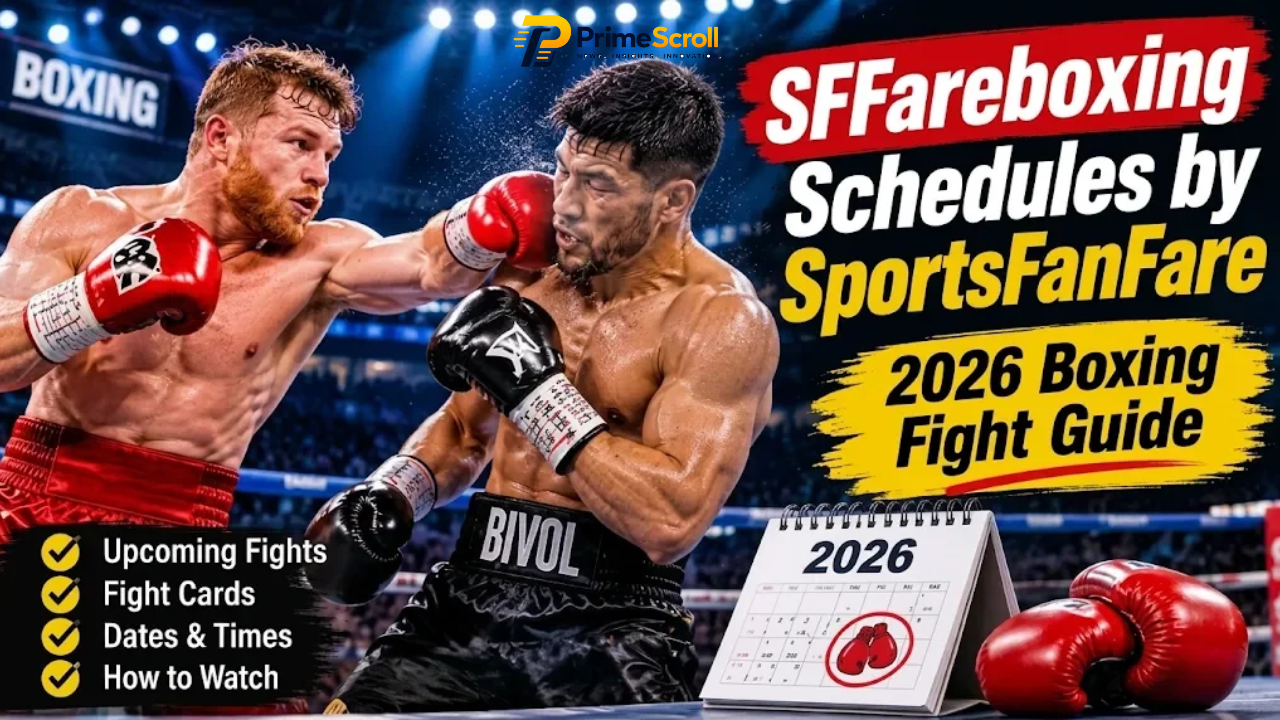
This is why SFFareboxing schedules by SportsFanFare is an interesting search term for boxing enthusiasts looking for organized fight information. Fans want to discover upcoming events, understand the matchups, check important dates, and make sure they know when the action begins.
But finding a fight date is only the beginning. You also need to understand the fight card, recognize championship contests, convert international start times, and check whether the original announcement is still accurate.
This complete guide explains how to approach boxing schedules, what information matters most, and how to develop a reliable routine for following professional boxing throughout 2026.
Understanding SFFareboxing Schedules by SportsFanFare
SFFareboxing schedules by SportsFanFare refers to a search for boxing-related schedules and event information associated with SportsFanFare.
The main interest behind this keyword is straightforward: boxing fans want an easier way to follow the sport without searching through multiple websites every time an important fight is announced.
A useful boxing schedule should help readers understand several things:
- Which boxing events are approaching.
- When each event is expected to take place.
- Which fighters are scheduled to compete.
- Whether a championship is involved.
- Where the event will be held.
- Which broadcaster or streaming service may carry it.
These details help fans decide which events deserve their attention.
It is important, however, to distinguish between the meaning of a search keyword and verified website functionality. Readers should check the actual SportsFanFare page before assuming that it provides live updates, automatic reminders, or a complete international fight calendar.
For reliable information, compare any third-party listing with announcements from the event promoter or relevant boxing organization.
Why Keeping Up With Boxing Events Requires More Attention
Boxing schedules are not always predictable. A major event may be announced months before fight night, while another matchup can take shape much closer to its proposed date.
Several factors make following the sport more complicated.
Independent Boxing Promotions
Unlike sports organized around one central competition calendar, professional boxing involves numerous promoters.
Companies such as Top Rank, Matchroom Boxing, and Golden Boy Promotions organize their own events. Each may have different fighters, venues, broadcasting agreements, and announcement schedules.
This means fans cannot depend on one organization to provide every important boxing date.
Changes During Fight Preparation
An announced matchup does not guarantee that the original plan will remain unchanged.
Injuries, medical concerns, contractual disagreements, and other organizational issues can affect a contest.
Sometimes the entire event is postponed. In other situations, only one fighter is replaced.
International Events and Different Time Zones
Major boxing competitions take place in the United States, United Kingdom, Saudi Arabia, Japan, and many other countries.
A fight advertised for Saturday evening in one location may begin on Sunday morning for international viewers.
This is particularly important for fans who follow American boxing from Pakistan or other Asian countries.
Different Broadcast Arrangements
Not every boxing event is available through the same broadcaster.
Some fights are included with a subscription, while other major events may require a separate purchase. Availability can also differ between countries.
A complete viewing plan therefore needs more than a date and a fighter’s name.
What Makes a Boxing Schedule Worth Following?
A good schedule should answer the most important questions without forcing readers to search through several unrelated pages.
The following details are particularly useful.
| Information | What Fans Should Understand |
|---|---|
| Event name | The official or commonly advertised event title |
| Date | The confirmed or announced competition date |
| Start time | When the broadcast or event is expected to begin |
| Time zone | The location or time standard used |
| Main event | The headline boxing matchup |
| Undercard | Other scheduled contests |
| Weight division | The category in which fighters compete |
| Championship status | Whether a recognized title is involved |
| Venue | The arena or location hosting the event |
| Broadcasting | Available television or streaming options |
| Event status | Whether the event remains scheduled |
Not every schedule will provide all these details. Nevertheless, the more complete the information, the easier it becomes to prepare for fight night.
One particularly important distinction is the difference between an event’s advertised start time and the expected start of its main event. These are often not the same.
How to Understand a Professional Boxing Fight Card
A boxing fight card is essentially the lineup of contests planned for an event.
For new fans, the terminology can seem complicated. However, understanding a few common expressions makes any schedule easier to read.
Main Event: The Headline Contest
The main event is usually the most prominent fight of the evening.
It may involve a world champion, an established contender, or two well-known boxers with a competitive history.
Because the main event is often scheduled after the supporting contests, its exact ring-walk time may depend on how long the earlier fights last.
Co-Main Event: The Second Major Attraction
The co-main event is another important matchup on the card.
Promoters use it to add interest to the overall event. It can feature championship contenders or established professional fighters.
For some viewers, the co-main event is just as interesting as the headline contest.
Undercard: More Than Just Supporting Fights
Undercard contests take place before the main event.
They can feature young prospects, experienced professionals, regional champions, and boxers working toward bigger opportunities.
Fans who only watch headline fights sometimes miss interesting performances from emerging fighters.
Preliminary Fights
Some events divide their undercard into preliminary and main-card sections.
Preliminary contests generally take place earlier in the broadcast schedule. Their purpose is to provide additional competitive matchups before the main portion of the event.
Understanding these divisions helps viewers choose which parts of an event they want to watch.
Boxing Weight Classes and Why They Matter
Boxing weight classes are an essential part of professional boxing because they help fighters compete against opponents in suitable weight divisions.
They help ensure that fighters compete within an established weight category rather than facing opponents with substantially different body weights.
Professional boxing recognizes 17 traditional men’s weight divisions under the widely used championship structure.
Here is a simplified overview.
| Weight Division | Maximum Weight |
|---|---|
| Minimumweight | 105 lb |
| Light Flyweight | 108 lb |
| Flyweight | 112 lb |
| Super Flyweight | 115 lb |
| Bantamweight | 118 lb |
| Super Bantamweight | 122 lb |
| Featherweight | 126 lb |
| Super Featherweight | 130 lb |
| Lightweight | 135 lb |
| Super Lightweight | 140 lb |
| Welterweight | 147 lb |
| Super Welterweight | 154 lb |
| Middleweight | 160 lb |
| Super Middleweight | 168 lb |
| Light Heavyweight | 175 lb |
| Cruiserweight | 200 lb |
| Heavyweight | Above 200 lb |
Note: These are commonly used professional men’s division limits. Women’s boxing and individual competition rules can have additional distinctions.
Weight classes also help explain why two fighters may have very different physical styles.
Lighter divisions are often associated with quick combinations and movement, while heavyweight contests can involve considerable punching power. These are general observations, not guarantees about how an individual fight will unfold.
Understanding Boxing Championships and Major Organizations
Championship information is another important part of following boxing schedules.
Several organizations award internationally recognized professional boxing titles.
World Boxing Council (WBC)
The WBC is one of the most recognized championship organizations in professional boxing.
Its green championship belt is familiar to many boxing fans. The organization sanctions title contests across multiple weight divisions.
World Boxing Association (WBA)
The WBA is another major organization with a long history in professional boxing.
Its championship events feature fighters from different countries and weight categories.
International Boxing Federation (IBF)
The IBF sanctions professional championship contests and maintains rankings across its recognized divisions.
World Boxing Organization (WBO)
The WBO is also a major championship organization. Its title fights regularly appear on prominent international boxing cards.
What Is a Unification Fight?
A unification contest takes place when champions holding titles from different organizations compete against one another.
For example, a boxer holding a WBC championship might face a champion recognized by the IBF.
These matchups attract considerable interest because the winner can consolidate multiple championship titles.
Pakistan Time Conversion: Never Confuse the Fight Start
International boxing schedules can create problems for viewers who live outside the event’s host country.
Pakistan Standard Time (PKT) is UTC+5 throughout the year. However, other countries change their clocks for daylight saving time.
The following table provides a practical reference.
| Event Location | Local Time Standard | Pakistan Time Difference |
|---|---|---|
| Las Vegas / Los Angeles | Pacific Standard Time | PKT is 13 hours ahead |
| Las Vegas / Los Angeles | Pacific Daylight Time | PKT is 12 hours ahead |
| New York | Eastern Standard Time | PKT is 10 hours ahead |
| New York | Eastern Daylight Time | PKT is 9 hours ahead |
| London | GMT | PKT is 5 hours ahead |
| London | BST | PKT is 4 hours ahead |
| Riyadh | Arabia Standard Time | PKT is 2 hours ahead |
These differences apply when the respective local time standards are in effect.
Practical Examples for Pakistani Viewers
Consider a hypothetical boxing event advertised for 9 PM in New York.
- During Eastern Standard Time, it would begin at 7 AM PKT the following day.
- During Eastern Daylight Time, it would begin at 6 AM PKT the following day.
Now consider an event scheduled for 9 PM in Riyadh.
Pakistan is two hours ahead, so the corresponding time would be 11 PM PKT on the same date.
These examples show why simply copying an event’s advertised time can cause confusion.
Before setting an alarm, check the date, location, and time zone together.
How to Check Whether a Scheduled Fight Is Still Confirmed
One of the biggest mistakes boxing fans make is treating an old announcement as permanent.
A fight that appeared on a schedule several weeks ago may have changed since then.
Use this verification process before relying on an event listing.
1. Find the original announcement.
Look for the event announcement from the promoter or organizing company. This helps establish what was officially planned.
2. Check the participating fighters.
Confirm that both boxers are still listed for the matchup. Look for replacement announcements or official withdrawals.
3. Review the event date and venue.
Check whether the original date and location remain unchanged.
4. Confirm the championship details.
If a title is involved, check the relevant championship organization’s announcement.
5. Verify the broadcast arrangement.
Visit the broadcaster’s official event listing to confirm availability in your country.
6. Check again on fight day.
A final check is worthwhile because changes can happen close to the event.
This approach is useful whether you discover a fight through SportsFanFare, a sports news website, or a promotional announcement.
A Practical Weekly Routine for Boxing Fans
You do not need to spend hours researching every upcoming fight.
A simple weekly routine can help you keep track of important events while avoiding unnecessary searches.
| When to Check | What to Do |
|---|---|
| Beginning of the week | Review upcoming boxing events |
| Three days before | Confirm matchups and broadcast options |
| One day before | Review weigh-in results and possible changes |
| Fight day | Recheck the date and local start time |
| After the event | Find official results and fight reports |
This routine works particularly well for viewers who follow several fighters or watch international boxing events.
Choose the Fights That Matter Most to You
Not every event needs the same level of attention.
You might be interested in heavyweight championship contests, a particular fighter’s career, or emerging talent in the lighter divisions.
Following a smaller number of fighters can make schedule research much easier.
Set Separate Reminders for Different Parts of the Event
If you want to watch the entire card, set a reminder for the preliminary broadcast.
If you only want the headline contest, remember that the main event may begin later than advertised because earlier fights can run longer.
Keeping these two reminders separate helps prevent confusion.
Common Mistakes That Lead to Missed Boxing Events
Even experienced boxing followers can make avoidable mistakes.
Here are some problems worth watching for:
- Using outdated schedules: An old event listing may contain an original date that has since changed.
- Ignoring time zones: A US event may take place on the following calendar day in Pakistan.
- Confusing broadcast and ring-walk times: The main event does not necessarily begin when the broadcast starts.
- Assuming every fight is included in a subscription: Some events require separate payment.
- Ignoring undercard announcements: Supporting contests can also change before the event.
- Trusting unconfirmed rumors: A proposed matchup is not the same as an officially announced fight.
- Forgetting daylight saving changes: International time differences are not always identical throughout the year.
Avoiding these mistakes can make following boxing much more straightforward.
Frequently Asked Questions
1. What are SFFareboxing schedules by SportsFanFare?
SFFareboxing schedules by SportsFanFare is a search phrase associated with boxing event schedules and related fight information. People searching for it generally want to discover upcoming matchups, event dates, and viewing details. Check the actual SportsFanFare listing to confirm what information it provides.
2. How can I find the latest professional boxing schedules?
You can research upcoming events through boxing promoters, championship organizations, sports broadcasters, and established sports news websites. Comparing announcements from multiple reliable sources helps you confirm dates and matchups.
3. Are boxing event times shown in Pakistan Standard Time?
Not necessarily. International boxing listings may use the host country’s local time or another time standard. Pakistani viewers should convert the advertised time to PKT before setting reminders.
4. Why do boxing fight cards change before an event?
Fighter injuries, medical issues, contractual disagreements, weight-related problems, and venue arrangements can affect a scheduled contest. Sometimes a replacement opponent is announced, while other situations result in postponement or cancellation.
5. What is the difference between a main event and an undercard?
The main event is the headline matchup, usually scheduled toward the end of the evening. Undercard fights are the supporting contests that take place earlier and may include rising prospects and established professional fighters.
6. How can I check where a boxing match will be broadcast?
Check the event promoter’s official announcement and the broadcaster’s website. Confirm that the service carries the particular event in your country because broadcasting rights can differ between regions.
Final Thoughts
Following professional boxing becomes much easier when you have a reliable way to organize event information. Instead of relying on a single announcement or an old screenshot, check the date, matchup, venue, broadcast details, and local start time before every major contest.
The interest in SFFareboxing schedules by SportsFanFare reflects a simple need among boxing fans: accessible information that helps them keep track of the sport.
Whether you follow championship unification fights, heavyweight contests, or promising young professionals, a little preparation can save you from missing an important matchup.
Make schedule checking part of your weekly routine, verify major announcements through official sources, and remember to account for international time differences. That way, you can spend less time searching for fight information and more time enjoying the boxing itself.
Also Read: CracksTube Explained: What It Is, What It Publishes, and How to Judge It